- Mon - Fri 9am-5pm, Sat & Sun Closed
- 1st Floor, 10 Boolwey St Bowral NSW 2576
- [email protected]
- 02 4861 1833


Using Superannuation for Dental Treatment — What You Need to Know
20/08/2026
Invisalign for Adults: The Process, Costs, Benefits and Risks Explained
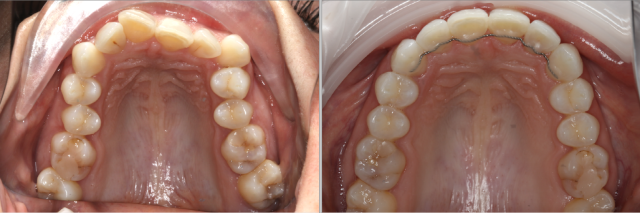
Many people assume that straightening teeth is something you do as a teenager. In reality, more adults are choosing orthodontic treatment later in life — sometimes because their teeth have gradually become more crowded, and sometimes because they finally have the opportunity to improve a smile that has bothered them for years. Some adults have had braces in the past and for a variety of reasons, their teeth have shifted with time resulting in crowded and crooked teeth
Invisalign® is one of the most popular ways of straightening teeth without conventional metal braces. The system uses a series of clear, removable aligners that gently move the teeth towards their planned positions.
And importantly, there is no particular age at which you become “too old” for Invisalign treatment. Adults can undergo orthodontic treatment successfully well into later life. What matters more than your age is the health of your teeth, gums and supporting bone.
For older adults, however, treatment often requires a little more planning because there may already be crowns, fillings, implants, missing teeth or some degree of gum recession or gum disease.
What is Invisalign?
Invisalign treatment uses a series of thin, clear plastic aligners made specifically for your teeth.
Each aligner is slightly different from the one before it. As you progress through the sequence, carefully controlled pressure gradually moves your teeth towards their planned positions.
Unlike fixed braces, Invisalign aligners can be removed. You take them out to eat, brush and floss, then put them back in. Keeping your teeth clean is infinitely easier than having traditional braces and wires.
The aligners are made of clear plastic and relatively discreet, which is one of the main reasons they appeal to adults who may not want conventional braces. They are also more aesthetic than metal braces and wires, making Invisalign a more acceptable form of treatment for adults.
For treatment to work predictably, they generally need to be worn for around 18-20 hours each day. This essentially means having your aligners in all the time except when you eat.
What happens during Invisalign treatment?
1. Your initial consultation
The first step is a thorough dental and orthodontic assessment.
Your dentist will examine not only whether your teeth are crooked, but also your bite, gum health, existing restorations and the condition of the teeth themselves.
This is especially important for older patients.
If you have gum disease, significant bone loss, untreated decay, gum recession or infected teeth, this will usually need to be addressed before orthodontic treatment begins.
Existing crowns, bridges and dental implants also need to be incorporated into the treatment plan. Dental implants, for example, are fixed into the jawbone and cannot be moved orthodontically in the same way as natural teeth. This can greatly impact treatment outcomes and the treatment needs to be carefully planned. Patient expectations and the final result attainable are importan considerations in our discussions with our patients.
2. Digital scanning and treatment planning
In many practices, traditional moulds of the teeth have largely been replaced by digital scanning.
A small scanner is passed around the teeth to create a detailed three-dimensional model of your mouth.
Your dentist then uses Invisalign’s proprietary software to plan how the teeth will move. Invisalign’s ClinCheck® software allows your clinician to plan individual tooth movements and show a simulation of the proposed result before treatment begins.
It is important to remember that this computer simulation is a treatment plan rather than a guarantee of the final result. Teeth are living structures and don’t always move exactly as predicted.
3. Your aligners are made
Once the treatment plan has been approved, your series of custom aligners is manufactured.
At your fitting appointment, your dentist will make sure the aligners fit correctly and explain how to insert, remove and care for them.
You will then move through the aligners according to the schedule prescribed for you.
4. You may need small attachments
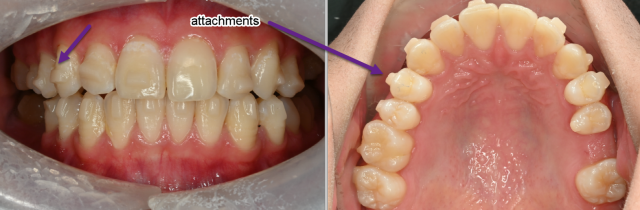
Many Invisalign patients require small tooth-coloured attachments bonded temporarily to certain teeth.
These are tiny pieces of composite resin that act a little like handles, allowing the aligner to grip the tooth and produce more complicated movements.
They are considerably less noticeable than conventional braces, although they do make Invisalign slightly more visible than the photographs of completely attachment-free aligners you may see in advertising.
Some patients may also require a very small amount of enamel to be removed between selected teeth. This is known as interproximal reduction, or IPR, and can create space when teeth are crowded.
5. Regular reviews
You will return for periodic appointments so your dentist can check that the teeth are moving as expected and that the aligners continue to fit properly. We also perform remote monitoring of all our Invisalign patients via Invisalign’s Virtual Care software. All of our patients are instructed to take photos of their teeth and aligners every week using htir mobile phones. These are uploaded onto Invisalign via an app. We can then give the patient feedback as to the progress of their treatment remotely. This results in fewer in-office visits and more efficient treatment.
Good compliance is extremely important. If the aligners are only worn occasionally, the teeth may not follow the planned movements and the next aligner may no longer fit correctly. This can delay treatment and in most cases, lack of compliance will result in treatment failure
6. Refinements
It is quite common to reach the end of the first series of aligners and find that a few teeth haven’t moved exactly as planned.
This doesn’t necessarily mean that treatment has failed. Additional aligners will be needed for many reasons. These could include:
- lack of compliance on the part of the patient
- severely rotated or displaced/tilted teeth
- incorrect planning on the part of the dentist
- biological factors including an individual’s biological response to treatment
- changes to your initial bite
- whether teeth are extracted to make space for tooth movement
Your teeth may simply be rescanned and another series of aligners made. These additional aligners are usually referred to as refinement aligners.
More complex cases may require more than one refinement phase.
How long does Invisalign treatment take?
Treatment time varies enormously.
A relatively small correction may take around six months. More comprehensive treatment commonly takes 12–18 months or longer, depending on how much movement is required and how well the teeth respond.
The Australian Society of Orthodontists notes that treatment length and complexity are major factors affecting both treatment time and cost.
One important distinction is that seeing straighter front teeth doesn’t necessarily mean that treatment is finished. Other important factors include the stability of your bite. These factors will influnce the long term success and stability of the final result.
Invisalign for people in their 40s, 50s and beyond
There are some additional considerations as we get older.
Gum health becomes increasingly important. If the bone supporting a tooth has already been reduced by periodontal disease, moving that tooth requires particularly careful assessment and monitoring.
Older adults are also more likely to have crowns, bridges, implants, root-filled teeth or missing teeth. These don’t automatically rule out Invisalign, but they can influence how treatment is planned.
Sometimes orthodontic treatment is actually part of a larger restorative plan. Teeth might be repositioned before an implant, crown, veneer or bridge is placed so the final dental work can be made in a more favourable position.
Another issue is gum recession.
If teeth have been crowded for many years, the triangular piece of gum between them may have reduced. Once the teeth are straightened, small dark spaces known as “black triangles” can occasionally become more noticeable. Moving teeth too aggressively to resolve crowding can also result in gum recession and compromised gum health.
Your dentist should discuss this possibility with you before treatment if you are at particular risk.
What are the benefits of Invisalign?
Perhaps the biggest advantage for adults is discretion. The aligners are clear, and from normal conversational distance many people will barely notice them.
Because the aligners are removable, you can brush and floss your teeth normally. There are also no restrictions on what you can eat because the aligners are removed during meals. Maintaining oral hygiene can therefore be easier than with conventional fixed braces.
The aligners also avoid brackets and wires rubbing against the lips and cheeks.
For people who attend meetings, social events or public-facing work, being able to briefly remove the aligners for an important occasion can also be useful — although doing this too frequently will slow treatment.
The digital planning process is another advantage. Before starting, your dentist can usually show you a computer simulation of the intended tooth movements, which can make it easier to understand what treatment is trying to achieve.
What are the disadvantages and risks?
Invisalign is orthodontic treatment, and all orthodontic treatment carries some risks.
The most common problem during the first few days with a new aligner is pressure or tenderness. This usually settles as the teeth adjust. The aligners can also be difficult to insert and remove in the initial stages of treatment. However, this tends to improve as treatment progresses.
The edges of an aligner may occasionally irritate the tongue, cheeks or gums, and some patients notice a temporary change in their speech.
More importantly, teeth and gums need to remain healthy throughout treatment. Poor cleaning and a high intake of sugar can lead to tooth decay or gum inflammation.
Orthodontic tooth movement can occasionally cause shortening of the roots of teeth, known as root resorption. Gum recession or periodontal breakdown can also occur in susceptible individuals. These are recognised potential complications of orthodontic treatment and are part of the reason proper examination, diagnosis and monitoring are important.
Not every tooth movement is equally predictable with clear aligners. Sometimes teeth don’t “track” with the aligner as planned, treatment takes longer than expected, additional aligners are required, or another orthodontic technique is needed.
Patient cooperation is another major factor. Fixed braces work 24 hours a day because they cannot be removed. Invisalign only works while you are wearing it. A minimum of 18-22 hours of daily wear is recommended.
If you know that you are likely to leave your aligners out for hours at a time, clear aligners may not be the most suitable treatment for you.
How much does Invisalign cost in Australia?
There isn’t a single Invisalign price because every treatment plan is different.
As a broad Australian guide, the Australian Society of Orthodontists estimates that a shorter course of clear-aligner treatment may cost approximately $4,000–$7,000, while more comprehensive treatment lasting around 12–18 months or longer may cost approximately $8,000–$12,000.
These figures should only be regarded as a guide.
Your actual fee will depend on the complexity of your bite, the number of aligners required, length of treatment, whether additional procedures are needed, what is included in the treatment package and the fees of the individual practice. What is less discussed is how your teeth will be retained after treatment is complete. This can be in the form of bonded wires on the inside of the fron teeth and/or removable plastic retainers. This will also affect the cost of treatment.
When comparing prices, it is worth asking what the quoted fee actually includes.
A lower initial fee may not necessarily include additional refinement aligners, retainers, X-rays, replacement aligners or extended treatment.
If you have private health insurance with orthodontic cover, your fund may contribute towards treatment. Orthodontic benefits frequently have annual or lifetime limits, so it is worth checking directly with your health fund before treatment begins.
What happens when Invisalign is finished?
Straight teeth don’t simply stay in their new positions forever.
Once active treatment finishes, retainers are required to help prevent the teeth from moving back towards their original positions.
For most adults, retention should be thought of as a long-term — often lifelong — part of orthodontic treatment. The Australian Dental Association notes that patients should understand that retention continues after active orthodontic treatment has finished and that retainers may involve ongoing costs.
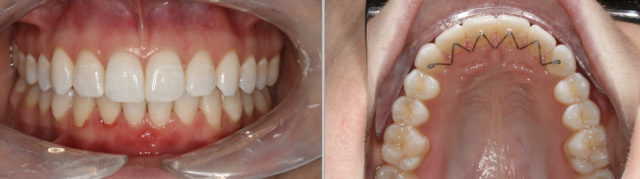
Retainers may be removable and worn at night, or your dentist may recommend a thin fixed wire bonded behind certain teeth. Sometimes both are used.
Am I too old for Invisalign?
For most people, the answer is no.
Teeth can continue to be moved orthodontically throughout adult life.
A 65-year-old with healthy teeth and gums may be a much better candidate for Invisalign than a 35-year-old with uncontrolled periodontal disease.
The question is therefore less about your birthday and more about the health of the foundations supporting your teeth.
A careful examination allows your dentist to determine what can realistically and safely be achieved.
Is Invisalign worth considering?
For the right patient, Invisalign can be an excellent way to improve tooth alignment without conventional braces.
It can be particularly attractive to adults because it is discreet, removable and generally fits easily into professional and social life.
However, successful treatment involves considerably more than simply ordering a set of clear plastic aligners.
Good diagnosis, careful planning, regular supervision and patient cooperation all play an important part in achieving a predictable result.
If you’ve noticed that your teeth have become increasingly crowded over the years — or you’ve simply always wanted them straighter — it may be worth discussing your options with your dentist.
Even if you’ve been putting it off for decades, straightening your teeth isn’t something that has an age limit.
Call us on 0248611833 to arrange a consultation to see whether Invisalign is suitable for you.
This article provides general information only. Invisalign and other orthodontic treatments should be recommended following an individual dental examination, diagnosis and treatment plan.