- Mon - Fri 9am-5pm, Sat & Sun Closed
- 1st Floor, 10 Boolwey St Bowral NSW 2576
- [email protected]
- 02 4861 1833





Not every wisdom tooth needs to come out — but when one starts causing problems, the sooner it’s addressed, the simpler the treatment usually is. Village Dental Care provides wisdom tooth removal in Bowral for patients at all stages of discomfort.
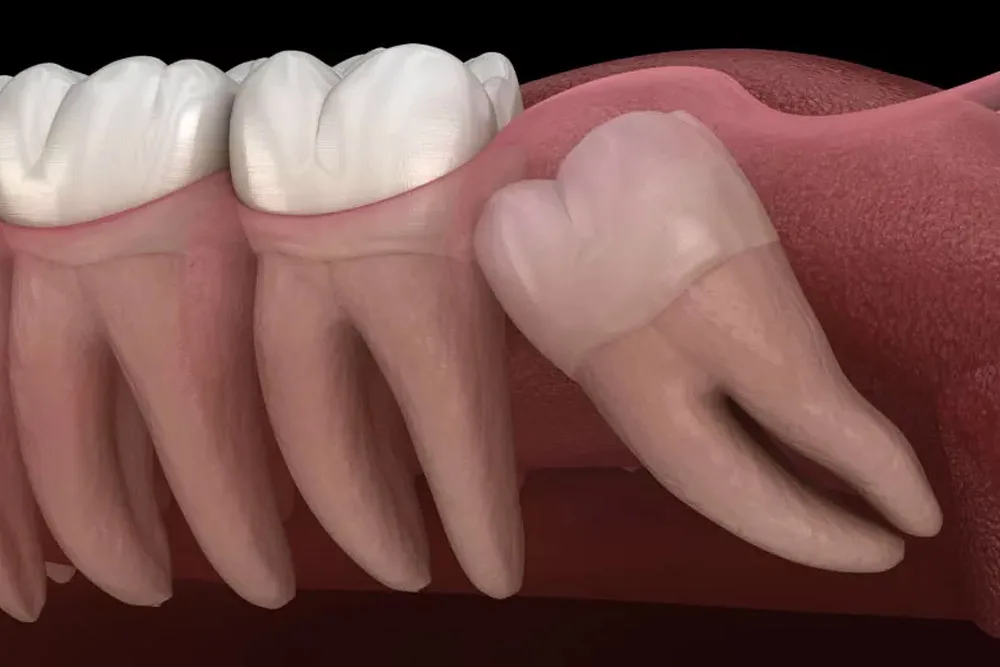
Wisdom teeth cause issues when there isn’t enough room for them to come through properly. A partially erupted tooth creates a gap that’s hard to clean and easy to infect. An impacted tooth — one that’s angled against the tooth in front — can push on adjacent roots over time without showing obvious symptoms until the damage is already done.
Signs that it’s worth having yours assessed include:
If the pain comes on suddenly or the swelling is spreading, that warrants prompt attention. Our emergency dentist in Bowral can assess and stabilise the situation before a planned extraction is arranged.
No two extractions are identical. Before anything happens, Dr Tan will take imaging to understand exactly how your wisdom teeth are positioned — whether they’re straight, angled, partially erupted, or fully impacted. That assessment determines which approach is appropriate.
Simpler extractions take minutes. More involved cases — where the tooth is buried or curved at the root — require a surgical approach but are still carried out under local anaesthetic in the chair.
For patients who feel anxious or who are having multiple teeth removed at once, sleep dentistry in Bowral is an option. Dr Tan is Dental Board certified to administer intravenous sedation on-site, so you can have the procedure completed in a more relaxed state without needing to go to the hospital.
At Village Dental Care, we prioritise your well-being and comfort throughout the wisdom teeth extraction procedure:
After wisdom teeth removal, it’s essential to follow post-operative instructions provided by our team. This may include guidelines on:
Wisdom teeth often require extraction due to various issues that can arise:
Partial Impaction: Wisdom teeth can partially emerge through the gum line, leaving a flap of gum tissue covering a portion of the tooth. This can create pockets where food particles and bacteria accumulate, leading to infection and gum inflammation.
Full Impaction: In some cases, wisdom teeth remain fully submerged in the jawbone. This can cause discomfort and potential long-term issues.
Wisdom teeth may grow at an angle or in a misaligned position, potentially exerting pressure on adjacent teeth, leading to crowding or shifting.
Impacted or misaligned wisdom teeth can cause pain, tenderness, and difficulty in opening your mouth fully. This discomfort can interfere with daily activities, including eating and speaking.
Impacted wisdom teeth can create spaces where bacteria thrive, increasing the risk of infection. In rare cases, cysts or tumours may develop around impacted wisdom teeth.
The recovery window is shorter than most people expect. The majority of patients are back to normal within three to five days, with the worst of the swelling usually peaking at 48 hours and then improving steadily.
Following the aftercare instructions makes a real difference. Keeping the site clean, avoiding smoking, not using a straw in the first 24 hours, and sticking to softer foods early on all reduce the risk of dry socket — the main complication to avoid after an extraction.
If anything feels off during healing, the team at Village Dental Care is easy to reach. You can familiarise yourself with the practice and meet the team before your appointment if that helps.
Not always. Wisdom teeth that have fully erupted, are positioned correctly, and can be cleaned properly may never cause problems. The decision to remove them depends on their position, the space available, and whether any symptoms are present. An X-ray gives a clear picture of what’s actually happening beneath the gum line.
The procedure is done under local anaesthetic, so you shouldn’t feel pain during it — pressure and movement, yes, but not pain. Post-procedure soreness is normal and manageable with over-the-counter pain relief for most patients. Sedation is also available if you’d prefer to be less aware of the procedure altogether.
Most patients feel significantly better within three to five days. Full healing of the socket takes longer — around two weeks — but this happens beneath the surface and doesn’t usually interfere with daily life. Complex surgical extractions may take slightly longer to settle.
Dry socket occurs when the blood clot that forms in the extraction site is dislodged or dissolves before the wound heals. It’s the most common complication, and it’s painful. Avoiding straws, smoking, and vigorous rinsing in the first 24 hours significantly lowers the risk. We’ll give you clear instructions before you leave.
Soft foods for the first few days — soups, yoghurt, mashed foods — are strongly recommended. Avoid anything hard, crunchy or very hot until the area has settled. Most patients are back to their normal diet within a week.
For a simple extraction, most patients take one day off and return the next. Surgical extractions or the removal of multiple teeth at once may mean two to three days before you’re comfortable at a desk. If your work is physically demanding, a longer rest period is usually recommended.
Acute wisdom tooth pain — especially with swelling — should be assessed promptly. Village Dental Care has emergency appointment availability for patients in Bowral and the surrounding areas. Contact us directly, and we’ll do our best to see you the same day.
The first step is booking an assessment with Dr Tan. He’ll take imaging, assess the position of your wisdom teeth, and give you a straightforward recommendation. You can contact us to organise a time that suits you.
Wisdom teeth that aren’t causing pain now can still be worth monitoring. Regular check-ups through general dentistry allow Dr Tan to track whether the position of your wisdom teeth is changing — and whether proactive removal would save you from a more involved procedure down the track.
The younger the patient, the simpler the extraction tends to be. Roots aren’t fully developed in younger adults, which means less bone involvement and faster healing. If removal has been recommended but you’ve been putting it off, earlier is generally easier.
Book a consultation with Dr Tan to find out whether removal is the right option — and what to expect if it is.